
Skip to content
AvailableOpen to senior AI / LLM engineering projects

I build Production Systemthat actuallyship

Senior AI Engineer · LLM Systems & RAG Specialist. Production RAG, multi-agent orchestration and the backend infrastructure that keeps them measurable, traced, evaluated and costed, not guessed at.

New Delhi, India3+ years shipping production systemsSole AI-layer owner, two roles running

Currently building

ThreeZinc AI Platform

Read the breakdown

Shipped for teams and brands including

SanjivaniEdge logo
RealtyCanvas logo
TalentifiX logo
Gajna Overseas logo
Medibridge logo
iMET Global logo
Skill Mantra logo
Advent Global Solutions logo
Khaleej logo
Vedix logo
Best Gaddi logo
Pinksky logo

The uncomfortable part

Anyone can call an LLM API. Almost nobody can keep it honest in production.

A demo that works once isn't a system. The real work starts when retrieval drifts, APIs fail, schemas change, and costs spiral. That's where I've spent the last three years—building retrieval pipelines, agent workflows, tracing, evaluations, and cost controls that make AI reliable in production.

0%+

RAGAS faithfulness

up from 62% in production

0%

lower inference latency

provider routing + caching

0%

fewer pipeline failures

fault-tolerant async ingestion

0%

LLM cost reduction

per-query, at sustained traffic

Every number here is measured,not estimated — pulled from RAGAS eval runs, LangSmith traces and provider billing on live production traffic.

What I actually do

One pipeline, six places it can quietly break.

I own all six. That ownership is the difference between an AI feature that demos well and one that survives a quarter of real traffic.

01

Ingest

Connectors, scrapers and APIs with retries, backoff and schema-drift guards.

  • REST
  • Async queues
  • Redis
02

Enrich

Semantic chunking, embeddings and metadata that retrieval can actually filter on.

  • Embeddings
  • pgvector
  • Pinecone
03

Orchestrate

Agent graphs with explicit state, tool use and structured outputs — no prompt soup.

  • LangGraph
  • Function calling
04

Evaluate

RAGAS harnesses on faithfulness, context precision and answer relevancy, in CI.

  • RAGAS
  • A/B tests
05

Observe

Traces on every node — tokens, latency, failure modes — plus guardrails and alerts.

  • LangSmith
  • Arize AI
06

Optimise

Request routing, caching, prompt compression and quantization where it pays off.

  • Routing
  • GGUF
  • vLLM
most teams stop at step three
What I actually build with

Master the AI workflows that get you hired & paid.

Four things people hire me for, and the stack each one runs on. Not a list of logos — tooling that has carried real production traffic.

9:41
CTClientonline

We really liked your examples, but there's one more thing — probably the most important:

Start typing…
01

Production RAG

Semantic chunking, cross-encoder reranking and metadata filtering — tuned against RAGAS, not vibes. Pinecone, ChromaDB, FAISS and pgvector in production at ~5K daily queries.

  • 62% → 85%+ faithfulness
  • Sub-800ms p95 retrieval at 10K docs
  • ~$0.003 / query with caching
02

Multi-Agent Systems

LangGraph-style agent graphs wired to real connectors — Instagram, LinkedIn, internal APIs — with explicit handling for rate limits, scraping edge cases and schema drift.

  • Ingestion → enrichment → reporting
  • Documented failure + recovery modes
  • Sub-200ms p95 report targets
03

LLM Infrastructure

Distributed Node.js and FastAPI backends, async job queues for compute-heavy inference, intelligent request routing, response caching and prompt compression.

  • Async queues for heavy inference
  • Request routing + response caching
  • SLA/SLO ownership and incident response
04

Evals & Observability

LangSmith tracing across every agent node, Arize AI model monitoring, RAGAS evaluation harnesses and A/B tests on prompt variants and retrieval strategies.

  • Context precision / faithfulness / relevancy
  • Token, latency and failure-mode dashboards
  • A/B tested prompts → 15% engagement lift
The through-line

Everythingconverges on the AI layer

Models, retrieval, storage, runtime, telemetry — a dozen moving parts, each with its own failure mode. Somebody has to own the place they all meet. On the last two teams, that was me.

OpenAI
Claude
LangChain
Python
Redis
PostgreSQL
Node.js
Hugging Face
Selected work

Systems with numbers attached

Pick a system to see how it actually runs — the diagram animates the same path production traffic takes.

Browse all projects

How it runs

  • Agent / LLM
  • Store
  • Output
  • Telemetry
spansInstagramGraph API + scrape fallbackLinkedInRate-limited connectorIngest queueRetries, backoff, schema guardsSupervisorLangGraph state machineEnrichEmbeddings + metadataAnalyseStructured outputsPostgresCampaign warehouseReportSub-200ms p95LangSmithEvery node traced

Connectors land raw posts; the queue absorbs rate limits and schema drift.

Multi-Agent Orchestration System

ThreeZinc AI Platform

Social connectors feed a supervisor that routes work to specialist agents, with every hop traced.

fewer pipeline failures
40%fewer pipeline failures
p95 report target
<200msp95 report target
agent nodes traced
100%agent nodes traced
  • LangGraph
  • LangSmith
  • Node.js
  • TypeScript
  • PostgreSQL
  • Redis
  • OpenAI

Diagrams animate the real data path — packets follow the same wires the system does. Dashed lines are telemetry, not traffic.

Products, tools and experiments

Full-stack products, developer tools and 3D web experiments — the range behind the specialisation.

LinkedIn

Writing

Notes on shipping AI features.

Connect
SSudhanshu SrivastavaSenior AI Engineer · 2w

Tools have changed, but responsibility hasn't.

On agile practice and what engineering excellence actually costs day to day.

#SoftwareEngineering#Agile
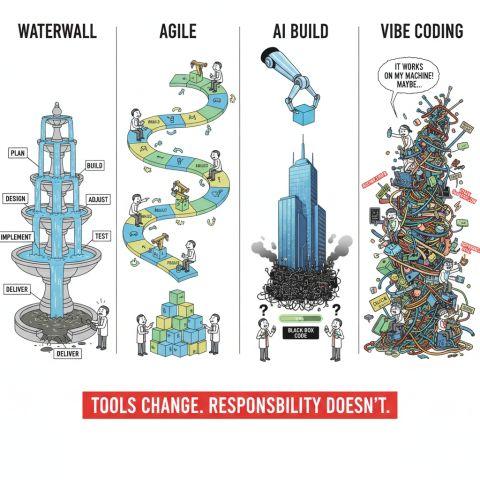
Tools have changed, but responsibility hasn't. — post image
Read on LinkedIn
Who it's for

The teams this tends to work best for.

No matter the size or the sector, the common thread is an AI feature that has to work for real users, on real data, with somebody accountable for the numbers.

AI StartupsFoundersProduct TeamsCTOsData PlatformsSaaS CompaniesAgenciesFintechEnterprise ITResearch TeamsEd-TechGrowth Teams
Track record

Three years of owning the whole layer

  1. Senior AI Engineer

    Gaup Media Pvt Ltd · New Delhi, India

    Feb 2026 — Present

    • Own end-to-end architecture of a production AI campaign-reporting system integrating Instagram and LinkedIn data pipelines via multi-agent orchestration (LangGraph-style agent graphs); architected ingestion → enrichment → reporting targeting sub-200ms p95 report generation.
    • Drive cross-functional AI delivery as sole AI-layer owner across data engineering and product — sprint planning, stakeholder reviews and every technical decision for the LLM layer.
    • Architected distributed Node.js backend APIs for automated analytics workflows with fault-tolerant async ingestion; cut pipeline failure rate by 40% through robust handling of API failures, rate limits and schema drift.
    • Implemented LLM observability and tracing with LangSmith for real-time monitoring of agent execution, token usage, latency and failure modes across multi-agent workflows.
    • LangGraph
    • LangSmith
    • Node.js
    • PostgreSQL
    • OpenAI
    • Redis
  2. Senior LLM Engineer

    Digitally Next · New Delhi, India

    Apr 2024 — Feb 2026

    • Led end-to-end delivery of production RAG pipelines using GPT-4, LangChain and vector search (Pinecone, ChromaDB) serving ~5K daily queries across 3+ client products; drove RAGAS faithfulness from 62% to 85%+ via semantic chunking, cross-encoder reranking and metadata filtering.
    • Owned LLM cost optimisation — intelligent request routing, response caching and prompt compression cut per-query API cost by 25% at sustained traffic; instrumented full model monitoring via Arize AI.
    • Designed and ran A/B tests on prompt variants and retrieval strategies; drove a 15% increase in user engagement using structured outputs and function-calling patterns.
    • Architected scalable REST APIs integrating ML models with PostgreSQL, MongoDB and Next.js frontends; defined SLA/SLO targets and owned production incident response for the AI feature layer.
    • Reduced application load time by 30% through React performance tuning, lazy loading, code-splitting and optimised API contracts — with direct Core Web Vitals improvement.
    • LangChain
    • GPT
    • Pinecone
    • ChromaDB
    • Arize AI
    • Next.js
    • FastAPI
  3. Software Engineer

    Happymonk AI · Bengaluru, India · Promoted from internship

    Mar 2023 — Apr 2024

    • Owned delivery of 4 client projects spanning fintech and SaaS using React, Node.js and AWS.
    • Mentored 3 junior developers on React architecture and backend best practices; reduced PR review cycles by 25% and lifted team code-quality standards.
    • Drove 20% growth in organic traffic and a 12% conversion uplift through structured data, lazy loading and Lighthouse-based Core Web Vitals work.
    • React
    • Node.js
    • AWS
    • TypeScript
    • SEO
  4. Software Engineer Intern

    Happymonk AI · Bengaluru, India · Internship

    Dec 2022 — Mar 2023

    • Delivered 15+ production web applications using React, Node.js and AWS (EC2, S3, Lambda) across fintech, e-commerce and SaaS clients.
    • Built Express-based microservices with DynamoDB and S3 for scalable storage; implemented AI-driven automation pipelines for analytics and personalisation.
    • Contributed to codebase quality through unit testing and code review inside Agile sprint cycles.
    • Express
    • DynamoDB
    • S3
    • Lambda
    • React

Education

B.Tech, Computer Science
Lovely Professional University
2020 — 2024 · Punjab, India

Certifications

  • Generative AI with Large Language ModelsDeepLearning.AI & AWS
  • Deep Learning SpecializationCoursera · deeplearning.ai
  • IBM Full Stack Application DevelopmentedX · IBM
  • Advanced React and GraphQLUdemy
Technical skills

The stack with receipts

Tap any of these for what I've actually done with it. No proficiency bars — a percentage next to a logo has never told anyone anything.

The toolkit

Everything I reach for, and why it's there

No tool here is on the list because it looked good on a slide. Each one earned its place solving a specific production problem.

AI & LLM Engineering

The orchestration layer. Agent graphs with explicit state beat one long prompt every time — they can be traced, tested and reasoned about.

  • RAG Pipelines
  • LangChain
  • LangGraph
  • LlamaIndex
  • OpenAI APIs
  • Structured Outputs
  • Function Calling
  • Hugging Face
  • Llama 3
  • Mistral
  • vLLM
  • Ollama
  • Prompt Engineering
  • Embeddings
  • Multi-agent Orchestration
  • LoRA / QLoRA
  • RAGAS
  • Inference Optimization

Observability & MLOps

If it isn't traced, it isn't real. Tokens, latency and failure modes go on a dashboard before the feature goes to users.

  • LangSmith
  • Arize AI
  • Helicone
  • Model Monitoring
  • Guardrails
  • LLM Tracing
  • Experiment Tracking
  • GitHub Actions

Vector Databases

Retrieval quality is a data problem before it's a model problem. Chunking, metadata and reranking do most of the heavy lifting.

  • Pinecone
  • ChromaDB
  • FAISS
  • pgvector

Backend & APIs

The unglamorous half. Async queues, request routing and honest API contracts are what keep an LLM feature from falling over under load.

  • Node.js
  • Express
  • Python
  • FastAPI
  • REST
  • Microservices
  • Async Job Queues
  • Distributed Systems
  • System Design

Frontend

The AI has to land somewhere. Shipping the interface myself means the contract between model and UI never gets lost in translation.

  • React
  • Next.js
  • TypeScript
  • Tailwind CSS
  • Core Web Vitals
  • SEO

Cloud & Data

Where it all runs. Containers, managed Postgres and object storage — boring, predictable, easy to hand over.

  • AWS EC2 / S3 / Lambda
  • Docker
  • Kubernetes
  • PostgreSQL
  • MongoDB
  • DynamoDB
  • Redis
  • MySQL
Questions

The things people always ask first

If yours isn't here, ask it directly — I answer anything with a concrete problem attached.

I own the AI layer end to end. That means architecture and retrieval design, prompt engineering, RAG pipeline tuning, deployment, evaluation harnesses, observability and cost control — plus the backend the whole thing sits on. In my last two roles I was the sole owner of that layer, which is a very different job from bolting an API call onto an existing product.

Open to senior AI / LLM engineering projects

Got an AI feature
that needs to actually work?

Send me the problem — the retrieval that keeps hallucinating, the pipeline that fails silently, the bill nobody can explain. I'll tell you straight whether I'm the right person for it.

usually replies within a day
New Delhi, India · working with distributed teams across time zones